
Computer Science & Business Systems

About Program Overview
PESCE takes pride to launch in partnership with India’s leading IT Service and Consulting Company – TCS, an industry ready BE Programme titled Computer Science and Business Systems (CSBS) in Academic year 2023-2024 with an intake of 60, to cater to the rising need of engineering talent with skills in Business Systems. The state of-the-art programme aims to impart knowledge of cutting-edge technologies and business skills to help the students be industry-ready. Emphasizing hands-on learning through state-of-the-art facilities, industry partnerships, the department fosters a learning environment that nurtures technical proficiency, strategic thinking, and ethical leadership. Its commitment to research, collaboration, and professional development ensures that graduates are well-prepared to drive technological advancements and contribute meaningfully to both business and society. The Department bridges the gap between technology and business, offering a unique interdisciplinary education that prepares students for the multifaceted challenges of the digital age. The programme in collaboration with TCS aims to expose students not only to the core topics of Computer Science but also develop an equal understanding of humanities, human values and management sciences. The programme is an apt choice for students aspiring to be business leads in the IT industry.
Total Intake(CS&E department)
240
Total Intake(CS&E (AI & ML))
60
Total Intake(CS&E (Data Science))
60
Total Intake(Computer Science & Business Systems )
60
Program Type
UG
Duration
4 Years
Academic programs offered
UG Program
PG Program
- M. Tech Programme in Computer Science and Engineering with approved intake of 18 students.
- M.Sc. (Engineering) by research
Research Program
- Ph.D.
Vision
“The Department aspires to cultivate a community of globally skilled, ethically sound, socially responsible and Industry-ready engineers through a holistic education approach."
Mission
The Department of Computer Science and Business Systems is committed to
- M1: Adopt best practices in teaching and learning by leveraging dedicated faculty, state-of-the-art infrastructure and comprehensive curriculum to deliver high-quality industry relevant education.
- M2: Strengthen industry partnerships to offer students hands-on experience, internships, mentorship and projects that enhance employability and address evolving societal needs.
- M3: Inculcate ethical values, entrepreneurial skills, product development mindset and business acumen to produce globally competent and responsible professionals ready to serve society.
- M4: To nurture lifelong learning practices and professional development to embrace technological innovation, navigate evolving business landscapes, engage in research and creative problem-solving.
Program Educational Objectives (PEOs)
Graduates of the program will be able to
- Demonstrate leadership and innovation in their professional careers by effectively integrating computer science principles with business systems to solve complex real-world problems.
- Engage in continuous professional development and lifelong learning to stay abreast of evolving technologies and business practices, ensuring sustained career growth and adaptability in a dynamic environment.
- Uphold high ethical standards and demonstrate social responsibility in their professional endeavors, contributing to sustainable development and the betterment of society.
- Excel in effective communication and teamwork, to collaborate successfully with interdisciplinary teams and stakeholders in a global business context.
Program Outcomes (POs)
Engineering Graduates will be able to
Knowledge & Attitude Profiles - Wks
Annexure I: Knowledge and Attitude Profile (WK)
- WK1: Natural Sciences and Social Sciences: A systematic, theory-based understanding of the natural sciences applicable to the discipline and awareness of relevant social sciences.
- WK2: Mathematics, Numerical Analysis and Computing: Conceptually-based mathematics, numerical analysis, data analysis, statistics and formal aspects of computer and information science to support detailed analysis and modelling applicable to the discipline.
- WK3: Engineering Fundamentals: A systematic, theory-based formulation of engineering fundamentals required in the engineering discipline.
- WK4: Engineering Specialist Knowledge: Engineering specialist knowledge that provides theoretical frameworks and bodies of knowledge for the accepted practice areas in the engineering discipline; much is at the forefront of the discipline.
- WK5: Engineering Design and Sustainability: Knowledge, including efficient resource use, environmental impacts, whole-life cost, reuse of resources, net zero carbon, and similar concepts, that supports engineering design and operations in a practice area.
- WK6: Engineering Practice and Technology: Knowledge of engineering practice and technology in the practice areas within the engineering discipline.
- WK7: Engineering and Society: Knowledge of the role of engineering in society and identified issues in engineering practice in the discipline, such as the professional responsibility of an engineer to public safety and sustainable development.
- WK8: Research and Critical Thinking: Engagement with selected knowledge in the current research literature of the discipline, awareness of the power of critical thinking and creative approaches to evaluate emerging issues.
- WK9: Ethics and Inclusive Practice: Ethics, inclusive behavior and conduct. Knowledge of professional ethics, responsibilities, and norms of engineering practice. Awareness of the need for diversity by reason of ethnicity, gender, age, physical ability, etc., with mutual understanding and respect, and of inclusive attitudes.
Knowledge & Attitude Profiles - Wks
Annexure I: Knowledge and Attitude Profile (WK)
- WK1: Natural Sciences and Social Sciences: A systematic, theory-based understanding of the natural sciences applicable to the discipline and awareness of relevant social sciences.
- WK2: Mathematics, Numerical Analysis and Computing: Conceptually-based mathematics, numerical analysis, data analysis, statistics and formal aspects of computer and information science to support detailed analysis and modelling applicable to the discipline.
- WK3: Engineering Fundamentals: A systematic, theory-based formulation of engineering fundamentals required in the engineering discipline.
- WK4: Engineering Specialist Knowledge: Engineering specialist knowledge that provides theoretical frameworks and bodies of knowledge for the accepted practice areas in the engineering discipline; much is at the forefront of the discipline.
- WK5: Engineering Design and Sustainability: Knowledge, including efficient resource use, environmental impacts, whole-life cost, reuse of resources, net zero carbon, and similar concepts, that supports engineering design and operations in a practice area.
- WK6: Engineering Practice and Technology: Knowledge of engineering practice and technology in the practice areas within the engineering discipline.
- WK7: Engineering and Society: Knowledge of the role of engineering in society and identified issues in engineering practice in the discipline, such as the professional responsibility of an engineer to public safety and sustainable development.
- WK8: Research and Critical Thinking: Engagement with selected knowledge in the current research literature of the discipline, awareness of the power of critical thinking and creative approaches to evaluate emerging issues.
- WK9: Ethics and Inclusive Practice: Ethics, inclusive behavior and conduct. Knowledge of professional ethics, responsibilities, and norms of engineering practice. Awareness of the need for diversity by reason of ethnicity, gender, age, physical ability, etc., with mutual understanding and respect, and of inclusive attitudes.
Program Specific Outcomes (PSOs)
The Under Graduate (UG) of B.E Computer Science & Business System Program has defined Program Specific Outcomes (PSO) which are listed below.
- PSO-1: Ability to apply critical thinking and problem-solving skills to develop software solutions using foundational knowledge of computer science, mathematics, science, management and humanities.
- PSO-2: Train students with knowledge and practical skills in Systems Informatics courses and application development, empowering them to excel as techno-managerial professionals, entrepreneurs, researchers and lifelong learners.

NBA Accreditation
Click the button below to view NBA accreditation details, faculty information and student documents of the Department of Computer Science & Business Systems.
View NBA Details


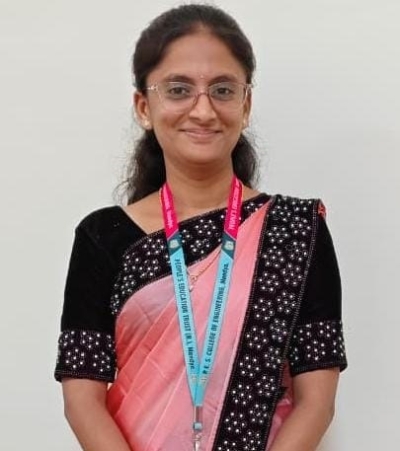
| Name of Technical Staff | Designation | Qualification | Work Experience (Yrs.) |
|---|---|---|---|
| Deepthi raj C R | SDA With Computer Operator | B.sc (CBZ) | 5 Months |
| Bhavya P | Helper | SSLC | 8 Months |


| Name | Guide Name | Title of Research | Date of Final Viva Completed |
|---|---|---|---|
| Dr.Geethanjali T M | Dr. Minavathi and Dr. Dinesh M S | Deep Learning Techniques for Organ Segmentation on Computed Tomography Images | Nov. 2023 |
| Name | Guide Name | University/Research Center | Topic Status |
|---|---|---|---|
| Puttaswamy B S | Dr Thillaiarasu N | Reva University | Thesis need to be Submitted |
| Shilpa S | Dr. Prabha R | VTU | Open Seminar Completed |
| Research Scholar | Title | Status | Details Link |
|---|
Detailed Publication ReportClick Here
| Application Number | Title | Faculty | Status |
|---|---|---|---|
| 6420157 | SMART KITCHEN WASTE DISPOSAL UNIT | Dr. Geethanjali T M | Published |
| Project Title | Year | Funding Agency | Amount (Rs.) | Status |
|---|
Placement Achivements
Click Here
Industry Visit to ISRO
Click Here
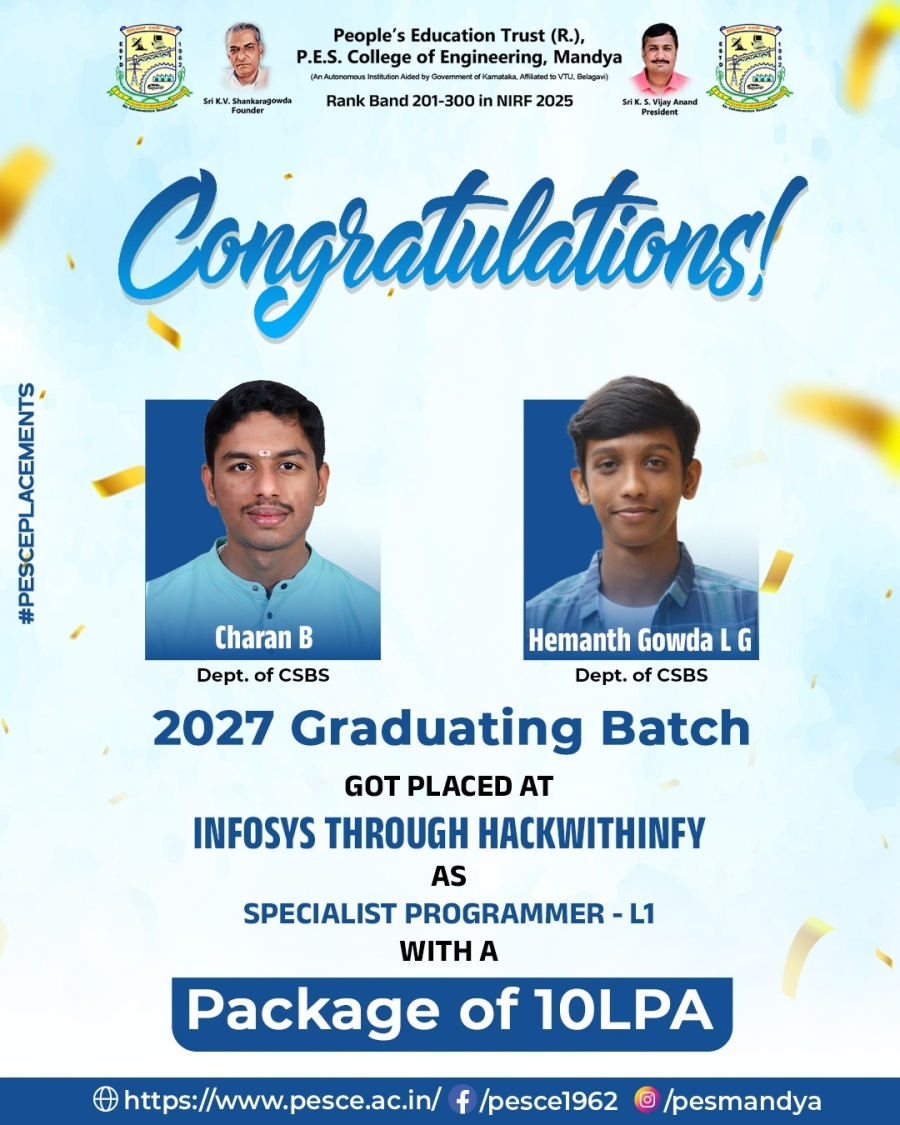
Graduating Batch Infosys Placement
Click Here
Fellowship achievement of CS&BS
Click Here
Fellowship achievement of CS&BS
Click Here
Fellowship achievement of CS&BS
Click Here
Fellowship achievement of CS&BS
Click Here
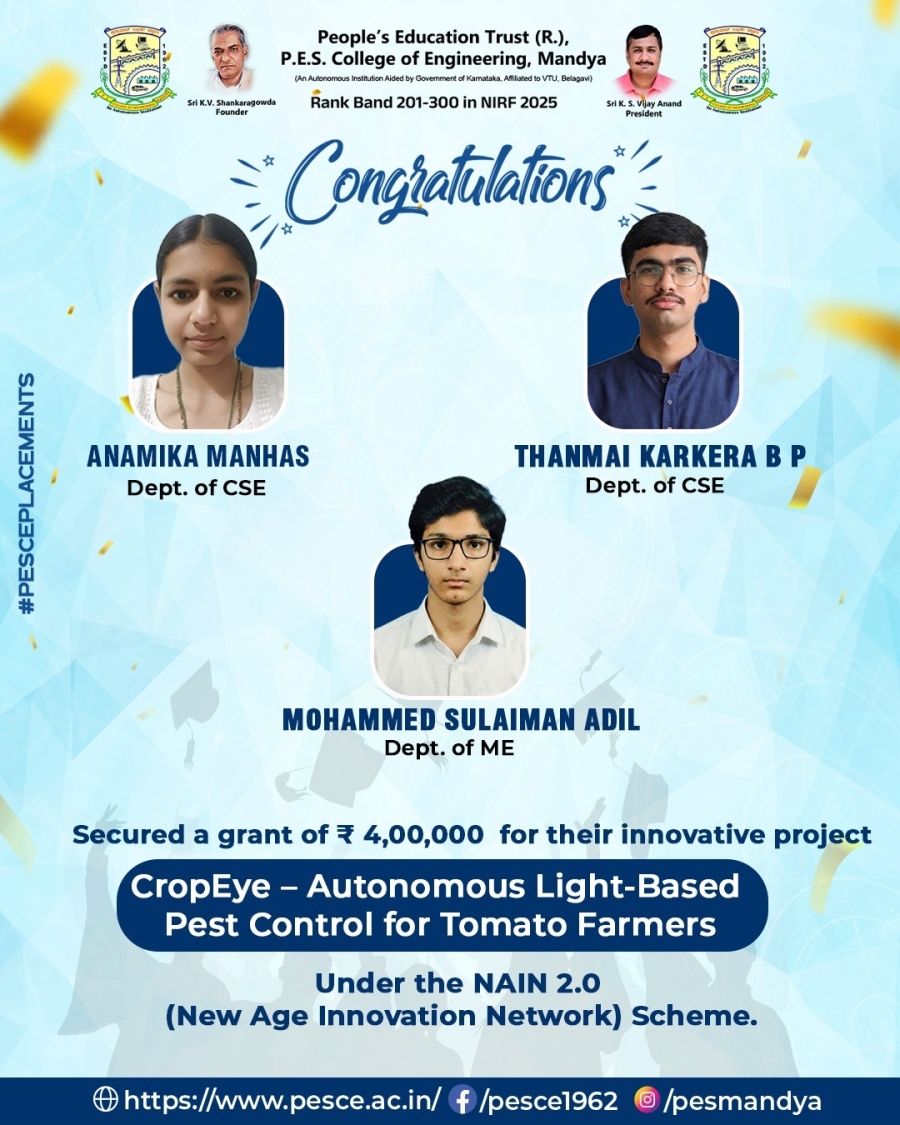
"JanSaathi" under the NAIN 2.0 (New Age Innovation Network) Scheme. Congratulations on a Remarkable Achievement ! to Shubham Jha (Dept of CS&BS), Alok Singh (Dept of CSDS), and Harshitha M.P(Dept of CS&BS) for securing a prestigious ₹4,50,000 Grant for their innovative project "JanSaathi" under NAIN 2.0 Scheme
Click Here


Happenings @PESCE CSBS Explore community & culture at PESCE ISE & discover what's happening around the campus.
22 August 2026
07 July 2026
13 October 2025


